

- Overview of Iran’s Petrochemical & Polyethylene Sector
- Polyethylene Production Capacity and Output
- Major Polyethylene-Producing Plants in Iran
- Polyethylene Export Destinations and Trade
- Domestic and Regional Polyethylene Market
- Iran’s Share in Regional and Global Markets
- Challenges in Iran’s Polyethylene Industry
- Advantages and Opportunities in Iran’s Polyethylene Market
- Standards, Certifications, and Logistics for Polyethylene Export
- Conclusion and Strategic Recommendations
Iran’s polyethylene (PE) industry forms a critical backbone of the country’s petrochemical sector. Leveraging its abundant natural gas resources, Iran produces a variety of polyethylene grades, including HDPE, LDPE, and LLDPE, serving both domestic and international markets. This article provides an in-depth look at production capacities, major manufacturing plants, export destinations, market trends, challenges, opportunities, and practical guidance for international investors, traders, and industry professionals.
Overview of Iran’s Petrochemical & Polyethylene Sector
Iran’s petrochemical sector is a cornerstone of the national economy, with a total production capacity of about 96.6 million tons per year as of 2023. Among various petrochemical products, polyethylene (PE) is one of the most in-demand polymers, produced mainly from natural gas–based ethylene.
Iran manufactures three main polyethylene grades: HDPE, used in pipes and rigid containers; LDPE, common in films and packaging; and LLDPE, favored for flexible and durable films. The country’s vast natural gas reserves, advanced infrastructure, and skilled workforce ensure cost-efficient and large-scale production.
Domestic demand for polymers is around 13 million tons annually, with a major share going to packaging and construction, while exports serve regional and global markets. Supported by government initiatives and new projects in Assaluyeh, Bandar Imam, and Marun, Iran plans to expand its polymer capacity by over 10 million tons by 2025, strengthening its position as a competitive, low-cost polyethylene producer in global markets.
Polyethylene Production Capacity and Output
Iran’s current polyethylene production capacity is estimated at approximately 9 million tons per year, with HDPE, LDPE, and LLDPE contributing significant shares. The National Petrochemical Company (NPC) has outlined plans to increase this capacity to around 16.7 million tons by 2028, aligning with national strategic goals to expand Iran’s petrochemical output.
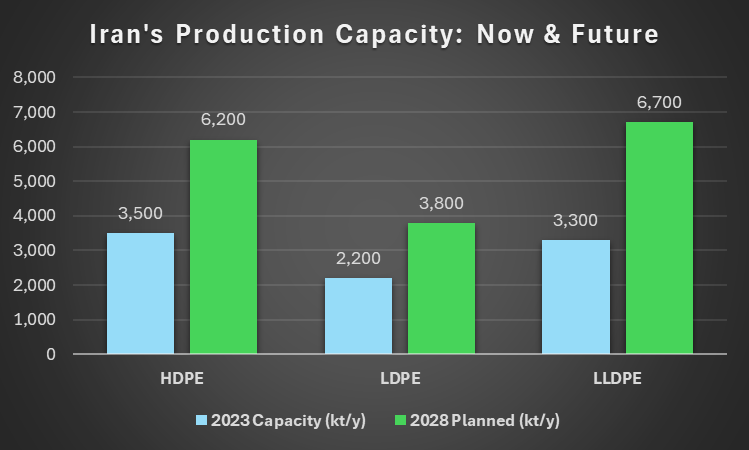
Actual production often varies due to operational constraints such as gas pressure fluctuations, maintenance shutdowns, and feedstock supply issues. For instance, in 2023, approximately 42% of Iran’s nominal polyethylene production capacity was curtailed due to gas feed shortages and operational adjustments.
Note: This highlights the difference between nominal capacity (maximum possible output under ideal conditions) and actual output, which can be affected by supply chain, technical, and regulatory factors.
The planned capacity expansion stems from ongoing and upcoming petrochemical projects in several regions:
- Assaluyeh (Pars Special Economic Energy Zone): Expansion of LLDPE and HDPE units with combined 1.5 Mt/y capacity.
- Bandar Imam Khomeini (BIPC): Upgrades and modernization to improve LDPE output by 300 kt/y.
- Marun & Kangan: New polymer plants under development targeting 1.2 Mt/y of additional polyethylene production.
Iran’s strategic plan also includes increasing production efficiency by adopting modern technologies, reducing energy consumption, and integrating ethylene production with downstream polymer plants. This approach ensures cost-effective production and strengthens Iran’s position in regional and international markets.
The polyethylene production capacity growth is expected to support both domestic consumption growth and export demands, particularly in nearby markets such as Turkey, Iraq, and Afghanistan, where demand for packaging and industrial polymers is rising steadily.
Major Polyethylene-Producing Plants in Iran

Iran hosts several major polyethylene production facilities, which collectively form the backbone of the country’s polymer output. These plants are strategically located near feedstock sources and key ports to facilitate both domestic distribution and export.
1. Amirkabir Petrochemical Company
Located in Bandar Imam Khomeini, Amirkabir produces a wide range of polyethylene products, including HDPE, LLDPE, and LDPE. The combined annual capacity is approximately 750,000 tons. The plant has modern polymerization units and emphasizes quality control, adhering to ISO 9001 and international polymer standards.
2. Arya Sasol Polymer Company
Situated in Assaluyeh, Arya Sasol specializes in MD/HDPE production with an annual capacity of 375,000 tons. The plant operates with state-of-the-art reactors and produces grades suitable for both domestic use and export. Arya Sasol emphasizes consistency in melt flow index (MFI) and density, which are critical parameters for industrial applications.
3. Laleh Petrochemical Company
Based in Bandar Imam, Laleh produces LDPE with a capacity of approximately 300,000 tons per year. The plant supports both packaging and flexible film industries. Its LDPE grades comply with ASTM D4976 and ISO standards, making them competitive in international markets.
4. Miandoab Petrochemical Company
Inaugurated in 2018, this facility produces HDPE with a capacity of 140,000 tons per year. Miandoab emphasizes producing specialized grades of HDPE for piping and injection molding applications.
5. Pars Petrochemical Company & Others
Several other smaller-scale facilities contribute to the national output, particularly in LLDPE production. These plants, mainly in Assaluyeh and Marun, focus on niche polymer grades and support export contracts to regional markets.
Iran’s polyethylene plants are designed to maximize efficiency. Advanced polymerization technologies, integration with ethylene feedstock production, and rigorous quality control contribute to low production costs and competitive pricing for exports. This technical edge allows Iran to compete in key international markets, despite logistical and geopolitical challenges.
Polyethylene Export Destinations and Trade
Iran has steadily expanded its polyethylene exports, overcoming challenges posed by international sanctions and logistical constraints. As of 2023, the country exported significant quantities of HDPE, LDPE, and LLDPE to multiple international markets.
Primary Export Destinations:
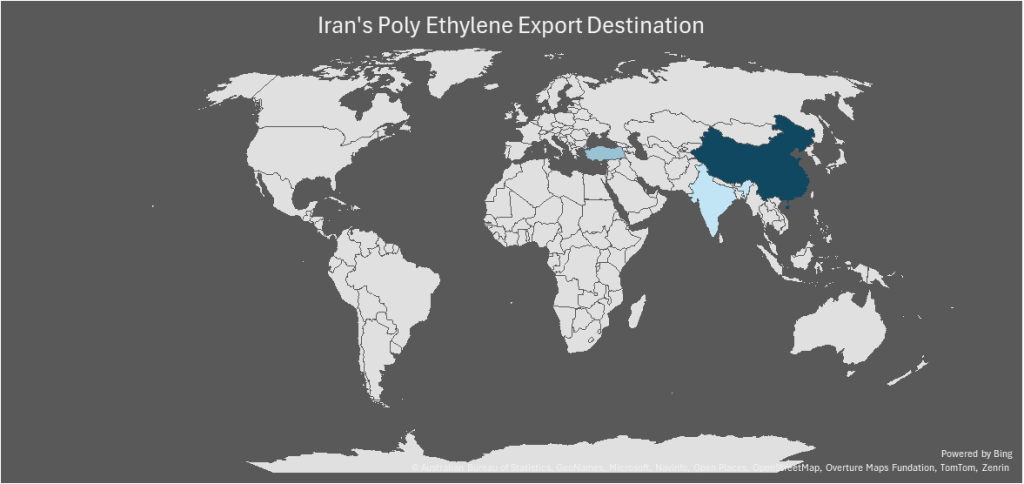
China
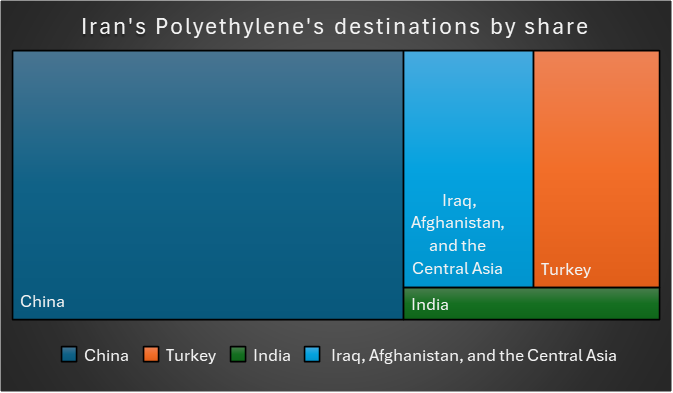
In 2023, China accounted for approximately $579 million in polyethylene imports from Iran. Iran’s HDPE and LDPE products are particularly competitive in China due to cost advantages and proximity to industrial hubs in Eastern China.
Turkey
Turkey imported around $165 million worth of polyethylene from Iran. The close geographic proximity allows for relatively low shipping costs, making Iran a preferred supplier for Turkish manufacturers.
India
India imported $44.9 million of Iranian polyethylene, with LLDPE being a popular grade for packaging and agricultural applications.
Other regional markets: Afghanistan, Iraq, and Central Asian countries also import Iranian polyethylene, primarily for packaging, construction, and consumer goods.
Iran’s export strategy leverages several advantages:
- Cost-Effective Production: Low natural gas prices reduce production costs, allowing Iranian polyethylene to compete internationally.
- Strategic Ports: Bandar Imam Khomeini and Bandar Abbas are key hubs for shipping, supporting FOB and CIF contracts efficiently.
- Quality Compliance: Iranian polyethylene products comply with international standards such as ASTM, ISO, and INSO, facilitating acceptance in global markets.
Export volumes have been growing despite sanctions, reflecting Iran’s ability to maintain competitiveness. By 2025, Iran aims to further increase exports to China and other Asian markets by leveraging newly expanded HDPE and LLDPE capacities.
Domestic and Regional Polyethylene Market
Iran’s domestic market absorbs a significant portion of polyethylene production, supporting industries such as packaging, construction, automotive, and consumer goods. Approximately 13 million tons of polymers are consumed locally each year, with polyethylene accounting for nearly 60% of this volume.
Domestic HDPE is used in rigid piping, water tanks, and industrial containers, while LDPE and LLDPE are widely applied in flexible films, packaging materials, and agricultural films. The demand has steadily increased due to population growth, urban development, and expanding industrial activities.
Regionally, Iran serves as a major supplier to neighboring countries in the Middle East and Central Asia. Countries such as Turkey, Iraq, Afghanistan, and Pakistan rely on Iranian polyethylene for construction and packaging industries. Iran’s competitive pricing, coupled with proximity to these markets, provides a strong regional advantage.
Emerging trends indicate growing demand for polyethylene in the Middle East due to infrastructure development, population growth, and industrialization. This regional growth, combined with Iran’s production capacity, positions the country as a leading regional supplier and a potential global competitor.
Iran’s Share in Regional and Global Markets
Iran holds a notable position in the global polyethylene market, benefiting from both strategic location and abundant feedstock. As of 2023, the global polyethylene market was valued at over $110 billion, with Iran contributing a significant share through its exports of HDPE, LDPE, and LLDPE.
Regionally, Iran is one of the leading suppliers of polyethylene to countries such as Turkey, Iraq, Afghanistan, and Central Asian nations. For example, Iran provides more than 10% of Turkey’s polyethylene imports by value, making it a key regional supplier. Iran’s competitive production costs and proximity to markets enable it to offer attractive pricing compared to global competitors.
Globally, Iran’s polyethylene exports are gaining traction in Asia, including China and India, where cost-effective HDPE and LLDPE products are increasingly preferred. By 2025, Iran aims to expand its market share further through capacity expansion, improved quality standards, and strategic export agreements.
Iran’s position in regional and global markets is reinforced by several factors:
- Low-Cost Feedstock: Abundant natural gas enables cost-efficient polyethylene production.
- Strategic Export Routes: Ports such as Bandar Imam and Bandar Abbas facilitate quick access to regional and international markets.
- Product Quality Compliance: Iranian PE meets international standards (ASTM, ISO), enhancing global competitiveness.
Challenges in Iran’s Polyethylene Industry
Despite significant growth, Iran’s polyethylene industry faces several challenges that impact production, export, and market competitiveness. One of the main constraints is international sanctions, which limit access to advanced technologies, spare parts, and financial systems, affecting both operations and exports.
Another key challenge is feedstock shortages. Gas supply interruptions and fluctuations in feedstock availability can reduce actual production compared to nominal capacity. In 2023, such constraints led to approximately 42% of polyethylene capacity being curtailed, highlighting the importance of reliable energy and raw material supply.
Infrastructure constraints also pose difficulties. Limited port capacity and aging transportation networks can delay exports, increasing costs and reducing competitiveness in global markets. The geographical distance from major European and Asian industrial centers adds logistical complexity for long-haul shipping.
Other operational challenges include maintenance of aging facilities, technology upgrades, and quality consistency. Ensuring that polymer grades meet international standards is essential to maintain export reliability, particularly for HDPE and LDPE used in critical applications like water piping and industrial packaging.
Addressing these challenges requires investment in technology, expansion of port and logistical infrastructure, and adoption of best practices in production management. Government incentives and strategic planning are crucial to overcoming these obstacles and ensuring sustainable growth in Iran’s polyethylene sector.
Advantages and Opportunities in Iran’s Polyethylene Market
Iran’s polyethylene industry offers significant advantages and opportunities for investors, traders, and industry stakeholders. One of the primary advantages is abundant feedstock, as Iran possesses some of the world’s largest natural gas reserves. This ensures low-cost ethylene production, which directly reduces the cost of polyethylene and improves global competitiveness.
Another advantage is strategic geographic location. Iran borders multiple high-demand markets, including Turkey, Iraq, Afghanistan, and Central Asian countries. This proximity enables faster delivery, lower transportation costs, and stronger trade relationships compared to distant suppliers.
Technological advancements and government support provide additional opportunities. Investments in modern polymerization units, process optimization, and quality assurance programs increase production efficiency, reduce energy consumption, and improve product quality. These initiatives position Iran to capture a larger share of both regional and global markets.
Investment opportunities in Iran polyethylene
1. Regional polymer market growth:
Increased demand in the Middle East for construction, packaging, and consumer goods provides growth potential for Iranian polyethylene.
2. Global Exports:
Asia, particularly China and India, presents high-volume markets for HDPE and LLDPE products.
3. Investment Potential:
New petrochemical projects, plant modernization, and export infrastructure development attract foreign and domestic investors.
Iran’s combination of resource availability, geographic advantage, and government-backed development plans creates a compelling case for sustained growth and long-term investment in the polyethylene sector.
Standards, Certifications, and Logistics for Polyethylene Export
Exporting polyethylene from Iran requires adherence to international standards, certifications, and efficient logistics management. Compliance with ISO, ASTM, and INSO standards ensures that Iranian polyethylene meets global quality requirements for HDPE, LDPE, and LLDPE. These certifications are essential for gaining acceptance in major markets such as China, India, and Europe.
Required export documentation includes:
- Quality Certificates
- Certificate of Origin
- Commercial Invoice
- Packing List
- Bill of Lading
Logistics is another critical factor in export efficiency. Iran primarily utilizes two strategic ports: Bandar Imam Khomeini and Bandar Abbas. These ports support both FOB (Free on Board) and CIF (Cost, Insurance, Freight) shipping contracts, facilitating smooth international transactions. Transportation from production plants to ports is managed via pipelines, trucking, and rail networks to ensure timely delivery.
Additionally, Iran maintains specialized storage and handling facilities to preserve polyethylene quality during transit. Proper packaging, moisture protection, and container handling are essential to prevent damage, particularly for LDPE films and LLDPE rolls destined for long-distance export.
By adhering to international standards and optimizing logistics, Iranian polyethylene maintains competitiveness in global markets, ensuring reliability and repeat business from international buyers.
Conclusion and Strategic Recommendations
Iran’s polyethylene industry stands as a key pillar of the national petrochemical sector, combining abundant natural gas resources, strategic geographic location, and growing domestic and international demand. With current production of approximately 9 million tons per year and planned expansions reaching 16.7 million tons by 2028, Iran is poised to strengthen its position in both regional and global markets.
Strategic recommendations :
- Invest in Plant Expansion and Technology Upgrades: Modernization enhances production efficiency and quality.
- Target Regional and Global Markets: Focus on high-demand countries in Asia, the Middle East, and Europe.
- Ensure Compliance with International Standards: Maintaining ISO, ASTM, and INSO certifications ensures export reliability.
- Optimize Logistics and Supply Chain: Efficient port operations, transportation, and storage are crucial for maintaining competitiveness.
- Monitor Market Trends and Policies: Staying informed about regional demand shifts, tariffs, and trade regulations supports strategic planning.