

Trade has always been inseparable from the historical trajectory of Iran. From the establishment of the Silk Road, the Iranian plateau functioned as a pivotal junction of East–West commerce. Under the Achaemenids, trade acquired an organised institutional form, supported by commercial policy, secure road networks, and caravanserais. The flourishing markets of Persepolis and Susa exchanged carpets, textiles, spices, and precious metals, underpinned by an advanced monetary system based on Daric gold and Siglos silver coinage.
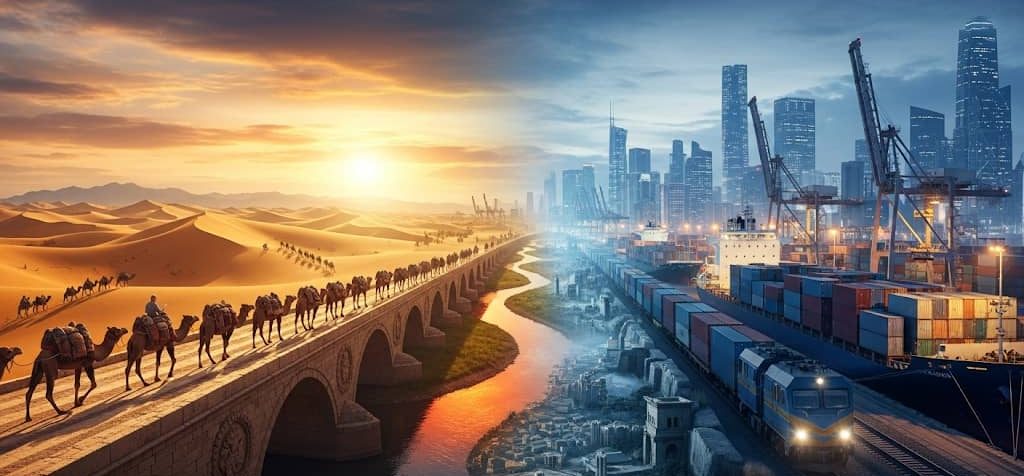
The Sassanian era marked the zenith of Iranian commerce, with maritime trade expanding towards India and China. A dense network of exchanges and the export of indigenous crafts and textiles testified to the economic dynamism of the time. Yet, political turmoil during the Middle Ages weakened this artery of East–West trade. While commerce never ceased, its scale diminished substantially.
In the twentieth century, the discovery of oil reoriented Iran’s economy towards energy exports. However, political instability, sanctions, and international constraints limited the development of non-oil sectors. Despite these obstacles, Iran retains considerable commercial potential in agriculture, handicrafts, petroleum and petrochemicals, and mining industries.
Iran’s strategic geography, rich natural resources, and skilled human capital provide structural advantages for re-establishing its historical role in global trade. Nevertheless, outdated infrastructure and diplomatic barriers demand structural reforms and sustained investment if the country is to regain its former prominence in international commerce.