

- Iran’s Urea Production Capacity and Types
- Key Export Markets for Iranian Urea
- Competitive Advantages of Iranian Urea
- Challenges Facing Iran’s Urea Exports
- Opportunities for Growth
- Economic Significance of Urea Exports
- Conclusion
Iran is a major player in the global fertiliser industry, with urea exports representing a cornerstone of its non-oil trade. Leveraging its abundant natural gas reserves, the country manufactures high-quality granular, prilled, and industrial urea for both agricultural and industrial use. While Asia remains the largest destination for Iran’s urea exports, Europe, Africa, and emerging markets in Latin America are increasingly significant. For global B2B traders, Iranian urea offers a combination of competitive pricing, reliability, and product diversity that strengthens its position in international supply chains.
Iran’s Urea Production Capacity and Types
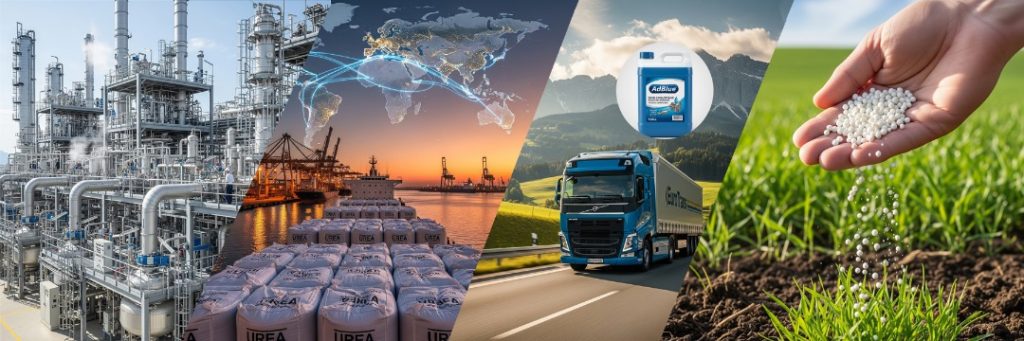
Iran produces more than 6 million tons of urea annually, supported by major petrochemical hubs in Bandar Imam (Formerly Shapur), Assaluyeh, Kermanshah, and Khorasan. These facilities benefit from low-cost feedstock and access to strategic ports.
Granular Urea
Granular urea is Iran’s most widely exported product. With high nitrogen concentration, uniform granule size, and long-lasting effects, it is ideal for large-scale farming of rice, wheat, sugarcane, and other staple crops. Its durability makes it especially valuable for long-distance markets.
Prilled and Industrial Urea
Prilled urea dissolves more easily, making it suitable for both agricultural and industrial applications. Industrial-grade urea from Iran is also a reliable feedstock for chemical resins, adhesives, and AdBlue (DEF) production. These value-added applications diversify Iran’s export portfolio beyond fertilizers.
Coated and Controlled-Release Urea Though smaller in volume, coated urea is gaining importance. This product reduces nitrogen loss, improves crop efficiency, and addresses environmental concerns—an advantage for buyers seeking sustainable fertilizer solutions.
Key Export Markets for Iranian Urea
Asia – The Largest Importer
Asia accounts for the majority of Iran’s urea exports, with India, China, Pakistan, Thailand, Vietnam, Malaysia, and Bangladesh as key buyers. Geographic proximity reduces logistics costs, while demand is driven by staple crop production such as rice and wheat. Long-term contracts and competitive pricing make Iran a strategic supplier to this region.
Europe – Growing but Challenging
European countries including Turkey, France, Spain, and Italy import Iranian urea for both agriculture and industrial use. However, sanctions, banking restrictions, and strict EU chemical regulations pose challenges. Many contracts are executed via intermediary hubs such as the UAE and Turkey to ensure smooth logistics and compliance.
Africa – Expanding Opportunities
Africa is an emerging growth region. In North Africa (Egypt, Morocco) and East Africa (Kenya, Tanzania), fertilizer demand is expanding rapidly due to growing agricultural needs. Infrastructure limitations and regulatory barriers exist, but Iran’s competitive pricing provides strong potential for market penetration.
Emerging Markets – Latin America
Brazil and Argentina represent high-potential but logistically challenging markets. Large-scale soybean, sugarcane, and corn production drive demand, though higher shipping costs compared to Asia reduce margins. Still, these destinations diversify Iran’s export footprint.
Competitive Advantages of Iranian Urea
- Price Competitiveness: Abundant natural gas keeps production costs low.
- High Quality: Consistent granule size, high nitrogen content, and compliance with international standards.
- Production Capacity: Ability to meet both short-term spot orders and long-term supply contracts.
- Strategic Ports: Facilities at Bandar Imam, Chabahar, and Assaluyeh ensure efficient global shipping.
- Product Versatility: From bulk fertilizer shipments to niche products such as AdBlue-grade industrial urea.

Challenges Facing Iran’s Urea Exports
Despite its strengths, Iran faces structural challenges:
- Sanctions: Banking and trade restrictions complicate direct transactions.
- Regional Competition: Rival exporters include Qatar, Saudi Arabia, and Russia.
- Logistics Costs: Longer distances to South America and Africa increase per-ton expenses.
- Regulatory Barriers: European environmental and AdBlue standards require strict compliance.
Opportunities for Growth
Looking ahead, Iran can expand its role in the global urea trade by:
- Securing long-term supply contracts in Asia, Africa, and Latin America.
- Investing in value-added products, such as coated fertilizers and high-purity industrial urea.
- Leveraging alternative trade routes through Chabahar Port and the North-South Transport Corridor to bypass logistical bottlenecks.
- Strengthening brand positioning, marketing Iranian urea as a reliable and cost-effective option for B2B buyers worldwide.
Economic Significance of Urea Exports
Urea exports are a key pillar of Iran’s non-oil economy. They generate foreign currency revenues, create domestic employment in petrochemical plants, logistics, and port services, and reinforce Iran’s global presence in both the fertilizer and industrial chemical markets. For traders, this reliability translates into stable partnerships and consistent supply.
Conclusion
Iran’s urea industry is a competitive force in global fertilizer markets, with strong foundations in production capacity, cost advantages, and geographic positioning. By overcoming logistical and regulatory challenges, expanding into new regions, and emphasizing value-added products, Iran is well-positioned to strengthen its role as a reliable supplier. For B2B buyers in agriculture and petrochemicals, Iranian urea remains an attractive option—balancing cost efficiency, product diversity, and long-term reliability.