

- The Untapped Resource of Pistachio Shells in Iran
- The Science & Technology of Conversion
- Iran’s Position & Market Potential
- Challenges, Gaps & Critical Success Factors
- Roadmap for Investors & Trade Companies
- Challenges → Opportunities: What Will Transform the Sector
- Transformational levers
- Conclusion & Actionable Next Steps for Companies and Investors
1. Introduction: The Untapped Resource of Pistachio Shells in Iran
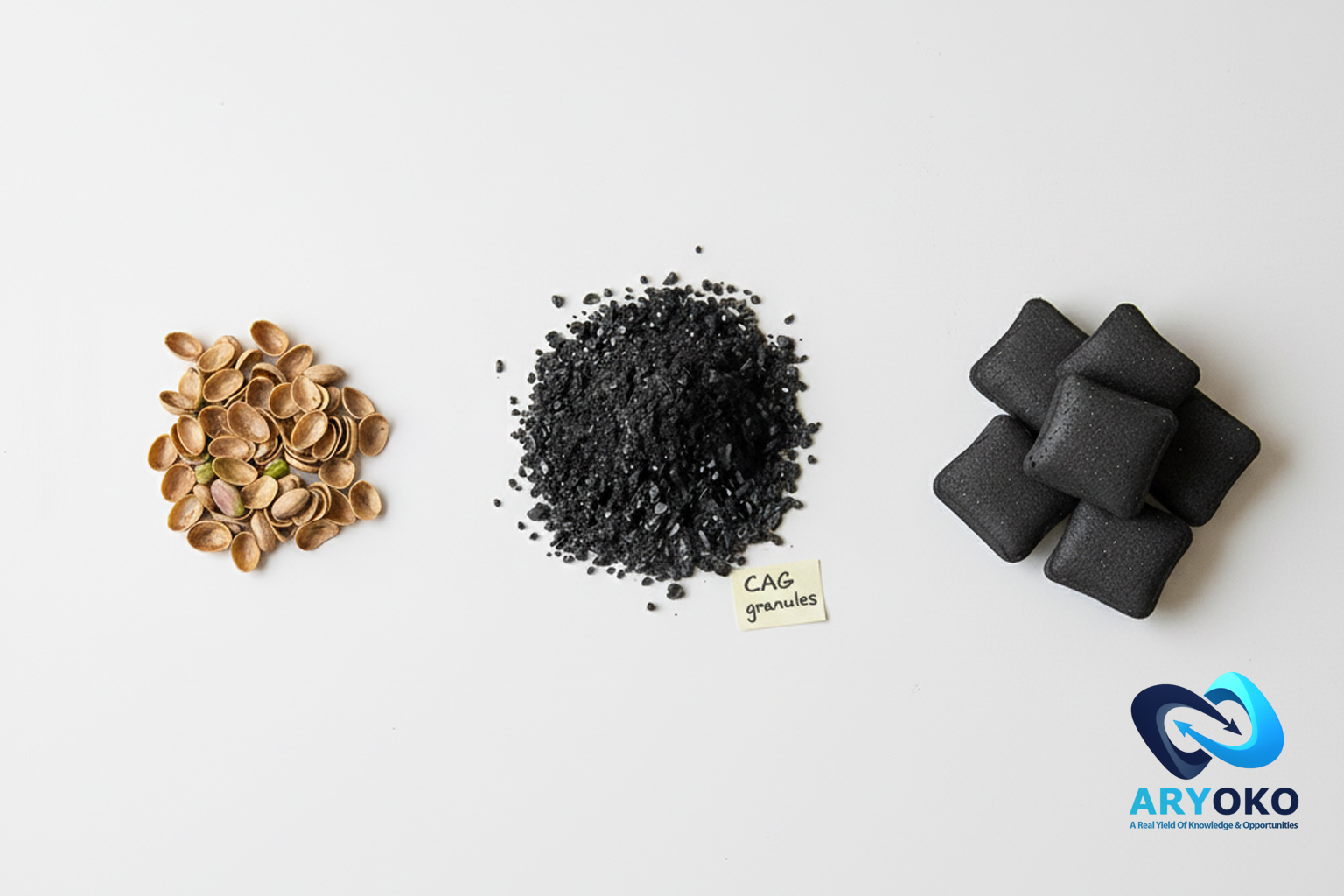
Iran is one of the world’s largest pistachio producers, generating hundreds of thousands of tons of kernels annually — and an equally substantial stream of shell waste that presents a strategic raw material for solid fuel and activated carbon manufacturing. According to the FAO and national reporting, Iran’s pistachio production in recent seasons has been in the order of several hundred thousand tons, placing it among the top global producers. digital-media.fao.org+1
Globally, the pistachio industry produces large volumes of shell and hull waste; several industry reviews estimate the global shell/hull residue at hundreds of thousands of tonnes per year. These shells, rich in lignocellulosic carbon, are ideal feedstock for two high-value product families: (A) charcoal/briquettes (for cooking and shisha/hookah), and (B) activated carbon (for adsorption, water/air purification, and industrial uses). Converting this agricultural residue into marketable carbon products aligns with circular-economy goals, reduces open-burning pollution, and creates exportable non-oil revenue streams. Cultivation Ag+1
2. The Science & Technology of Conversion
2.1. Overview: Pyrolysis → Charcoal → Activation
Two sequential technological routes are used depending on the final product:
2.1.1- Pyrolysis / carbonization
controlled thermal degradation of shells (low-oxygen conditions) to produce charcoal/biochar and volatile co-products (bio-oil, syngas). Process parameters (temperature, heating rate, residence time) determine yield, fixed carbon content, ash fraction and calorific value. Studies on pistachio shells show pyrolysis yields a high-energy char with favourable fixed-carbon and low-sulfur content suitable for briquetting and fuel. ScienceDirect+1
2.1.2- Activation (physical or chemical)
converting charcoal into activated carbon by increasing surface area and porosity. Physical activation uses steam or CO₂ at high temperature; chemical activation uses activating agents (KOH, H₃PO₄, ZnCl₂). Research on pistachio-shell-derived activated carbon reports specific surface areas from several hundred up to ~800+ m²/g and competitive pore structure for adsorption applications. These properties make pistachio-derived AC useful for water treatment, gas adsorption and industrial purification. ScienceDirect+1
| Product Type | Feedstock Moisture (%) | Carbonization Temp (°C) | Activation Method | Specific Surface Area (SBET, m²/g) | Typical Applications |
| Raw Charcoal (Biochar) | 8–12% | 400–550 °C | — (non-activated) | 50–120 | Solid fuel (briquettes), shisha/hookah charcoal, BBQ fuel |
| Physically Activated Carbon | 6–10% | 650–850 °C | Steam or CO₂ activation | 600–950 | Air purification, water filtration, solvent recovery |
| Chemically Activated Carbon (H₃PO₄) | 5–8% | 450–600 °C | Phosphoric acid impregnation + heat | 900–1300 | Gold adsorption, wastewater treatment, gas purification |
| Chemically Activated Carbon (KOH) | 5–7% | 700–850 °C | Potassium hydroxide activation | 1200–2000 | Supercapacitors, energy storage, high-performance adsorbents |
| Briquetted Charcoal (Compressed) | 8–10% | 500–600 °C | — (post-carbonized, pressed) | 100–150 | Hookah charcoal, domestic cooking fuel, restaurant supply |
2.2. Pyrolysis & Charcoal Briquette Production
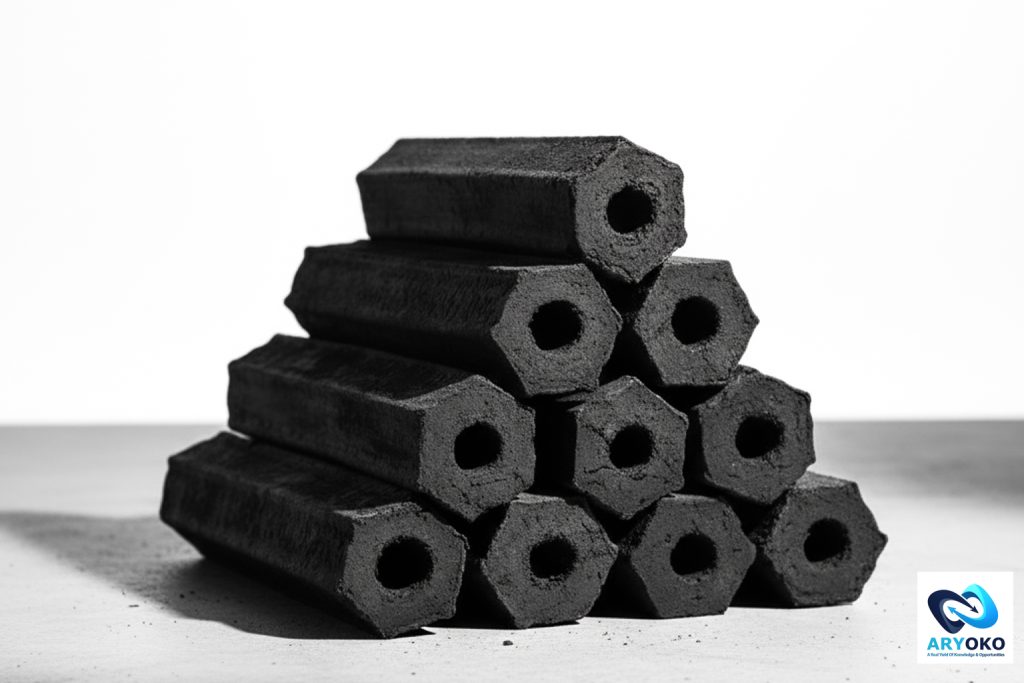
Pistachio shells are mechanically cleaned and dried, then carbonized in kilns (batch or continuous) at 400–700°C to produce charcoal with high fixed carbon (often >70–80%) and low sulfur. The char is milled, mixed with binder (e.g., starch, molasses) and compressed into briquettes or hexagonal coals for shisha/hookah and BBQ markets. Fuel tests show good calorific value and stable combustion; briquettes can achieve high density and controlled burning times comparable to hardwood charcoal. Several Iranian manufacturers already produce and export pistachio-shell briquettes tailored to shisha markets.
2.3. Activation & Activated Carbon Properties
Chemical/physical activation of pistachio shell char yields activated carbon with high micropore and mesopore volumes. Reported BET surface areas in the literature range from ~700 m²/g (physical activation) to 800+ m²/g in metal-modified or chemically activated samples, with adsorption capacities suitable for dyes, heavy metals and volatile organic compounds. Such AC competes with coconut shell and wood-based AC in specific applications (especially water treatment and gas adsorption), provided consistent quality and certification are met. ScienceDirect+1
Complementary Table:
| Feedstock & Activation | SBET (m²/g) | Pore Volume (cm³/g) | Adsorption Capacity | Target Pollutant | Dye/metal ions |
| Pistachio shell, physical activation (CO₂) | ~715.34 m²/g | 0.346 cm³/g | 3.29 mmol/g (~72.7 mg/g for CO₂) | CO₂ gas | Evaluation of Pistachio Shells as Solid Wastes to Produce Activated Carbon for CO₂ Capture — SBET and pore volume reported. (SSRN) |
| Pistachio shell, chemical activation (microwave + KOH) | ~700.53 m²/g | 0.375 cm³/g | 296.57 mg/g (Methylene Blue dye) | Dye (MB) | Preparation and characterization of activated carbon from pistachio nut shells via microwave‑induced chemical activation — SBET and adsorption capacity. (ResearchGate) |
| Pistachio shell, chemical activation + steam (biochar) | 531 m²/g | — | 87 mg/g (CO₂) & 9.6 mg/g (H₂S) | CO₂ & H₂S gases | Development of Pistachio Shell‑Based Bioadsorbents Through Activation for CO₂ and H₂S Adsorption — SBET given; pore volume not fully reported. (MDPI) |
| Pistachio shell, various activation agents (review) | data range (some up to ~1640 m²/g) | — | Capacity >100 mg/g for dyes/metal ions | Dye / metal ions | Review of Pistachio Shell Use to Remove Pollutants from Aqueous Solutions — review summarises many studies. (biointerfaceresearch.com) |
| Pistachio shell, chemical activation (recent, H₃PO₄ maybe) | ~579.4 m²/g | 0.340 cm³/g | Hydrogen storage data ( ~4.6 mmol/g ) | Hydrogen gas | Analysis of Pistachio Shell‑derived Activated Porous Carbon — not for lead/dye/mercury but gives pore/area metrics. (ro.ecu.edu.au) |
3. Iran’s Position & Market Potential
3.1. Domestic Supply & Waste Volume
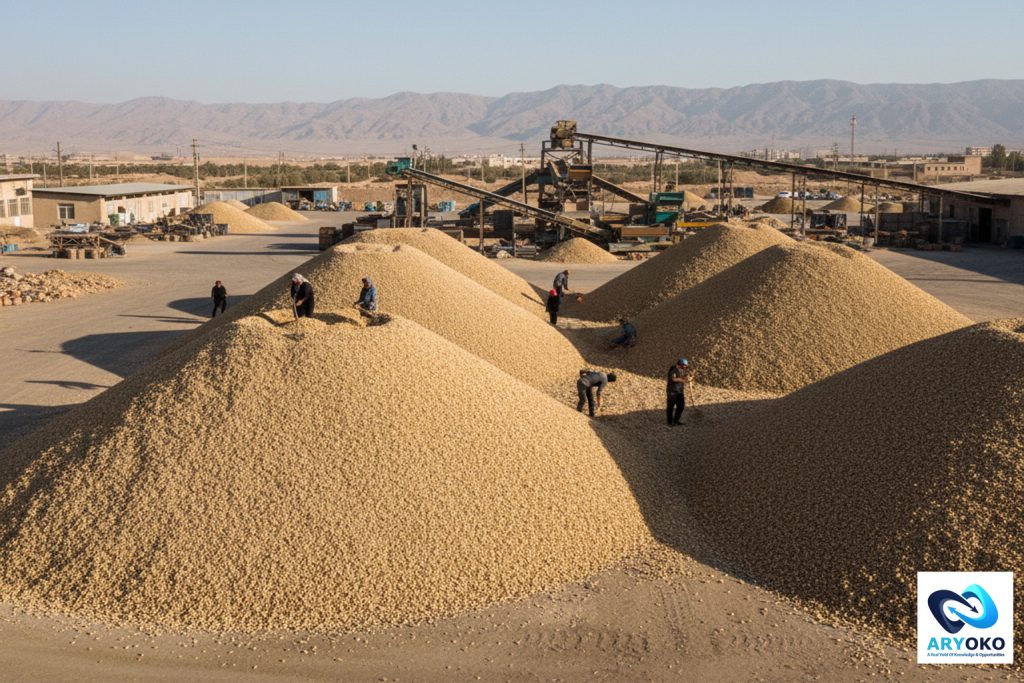
Iran’s large pistachio output creates a continuous feedstock supply for carbon product plants. National production figures (hundreds of thousands of tonnes yearly) imply shell/hull residues that — using conservative shell-to-kernel ratios in the range of ~45–55% by weight — translate into tens to hundreds of thousands of tonnes of shell waste annually available for industrial valorization. Converting even a fraction of this stream unlocks significant raw material for local manufacturing of briquettes and activated carbon. digital-media.fao.org+1
3.2. Export Opportunities & Target Markets
Iran already exports wood & charcoal product categories (UN COMTRADE / trading databases report tens to low hundreds of millions USD in related HS categories), indicating an export channel and buyer base that could absorb pistachio-shell charcoal and briquettes. Neighboring Middle Eastern markets (Iraq, UAE, Persian Gulf states), plus regional hubs (Turkey) and some European special buyers for activated carbon, represent realistic demand markets — especially for shisha charcoal (large demand across the Middle East and parts of Europe) and for industrial activated carbon in water treatment projects in Asia and the Middle East. Trading Economics+1
4. Challenges, Gaps & Critical Success Factors
4.1. Technical & Quality Standards
Activated carbon and charcoal used for cooking or shisha require strict quality control. For AC, parameters such as surface area (BET), pore size distribution, ash content, moisture, and contaminant limits must meet buyer specifications and international standards (buyers will often require ISO/ASTM certificates or lab reports). For shisha charcoal, uniform ignition, low chemical residues, and consistent burn time are crucial. Achieving reproducible metrics across batches requires investment in process control, test labs and QA procedures — a common gap for many agro-waste startups. ScienceDirect+1
4.2. Logistics, Export Barriers & Market Access
Key barriers: logistics (bulk density and freight economics), port handling, export documentation (phytosanitary and product safety declarations where relevant), and sanctions-related banking/insurance complexities for some buyers. Tariff regimes, non-tariff measures and buyer certifications also influence market entry. Successful exporters in Iran have navigated these by using regional distributors, third-party QC labs, and export houses specializing in charcoal/forest products. Compliance with MSDS, REACH (for EU chemical imports in some AC use cases), and buyer audits will be necessary for scaling exports. Trading Economics+1
5. Roadmap for Investors & Trade Companies
5.1. Business Models & Value-Chain Overview
Three pragmatic models:
- Integrated Processor — source shells from processors, carbonize and activate on-site; sell AC to industrial buyers and briquettes to retail/wholesale shisha markets.
- Toll-Processing Contract — company builds activation plant; processors deliver shells under long-term off-take agreements.
- Export Trading House — buy finished briquettes/charcoal from local producers, handle QC, branding and export logistics.
Value-chain components: sourcing (collection & transport), pre-processing (cleaning/drying), carbonization, activation (if producing AC), briquetting, QC & certification, packaging, distribution & export. A successful model often combines offtake agreements with local processors plus an anchor export customer. (Suggested KPIs below).
5.2. Key Metrics & Financial Indicators
Investors should track: feedstock cost per tonne (including collection), CAPEX for kilns & activation ovens, operating costs (energy, labor, chemicals), yield (tons of final AC or briquette per ton shells), selling price per tonne (segmented: shisha briquette vs. industrial AC), break-even throughput and EBITDA margins. Example research shows activated carbon yields and high SBET figures — which demand premium pricing in industrial markets if certified. Early pilots should aim for a modular scale (10–50 t/month feedstock) to validate QC before scaling. ScienceDirect
6. Challenges → Opportunities: What Will Transform the Sector
Opportunities
- Abundant Feedstock: a reliable stream of pistachio shells concentrated in processing hubs.
- High-quality AC: research demonstrates competitive surface areas making pistachio AC suitable for high-value adsorption markets. PMC
- Regional Demand: large regional markets for shisha charcoal and growing water-treatment investments across MENA and Asia. charcoal.pro
Transformational levers
- Standardization & Certification — accredited lab testing, ISO/ASTM conformity for AC, MSDS and product specs for charcoal.
- Vertical Integration & Off-takers — long-term supply agreements with processors and offtake commitments from industrial buyers or branded consumer channels.
- Process Optimization — energy-efficient kilns, recovery of syngas/bio-oil for local energy use, chemical-free briquetting for premium markets.
- Export Enablement — partnerships with trusted freight forwarders, third-party QC, and targeted marketing to distributors in Iraq, UAE, Turkey and selected EU buyers.
7. Conclusion & Actionable Next Steps for Companies and Investors
Pistachio shells represent a low-cost, high-volume feedstock with demonstrated technical viability for both charcoal briquettes and activated carbon. Empirical studies show that properly activated pistachio-shell AC attains high surface areas and adsorption capacity, while carbonized shells produce dense, long-burning briquettes demanded by shisha and BBQ markets. For investors and trading houses, the immediate action plan is clear:
- Pilot & Test: run a 3–6 month pilot (5–20 t/month feedstock) to validate yield, SBET and briquette specs.
- QA & Certification: set up lab partnerships for ISO / ASTM testing and produce MSDS / product data sheets.
- Of-take & Distribution: secure anchor buyers in regional shisha/BBQ markets and begin technical outreach to water-treatment companies for AC trials.
- Finance & Scale: model CAPEX for a modular plant, consider EPC or tolling structures and arrange export logistics and payment rails.
If executed with attention to quality, certification and targeted market entry, pistachio-shell carbon products from Iran can become a robust non-oil export niche and an exemplar of agricultural-waste valorization.