
- The Legacy of Iranian Caviar
- Major Varieties of Iranian Caviar
- Production and Aquaculture of Iranian Caviar
- Export Markets and Global Reach
- Regulations, Standards, and Certifications
- Challenges Facing the Iranian Caviar Industry
- Opportunities and Competitive Advantages
- Conclusion
Introduction
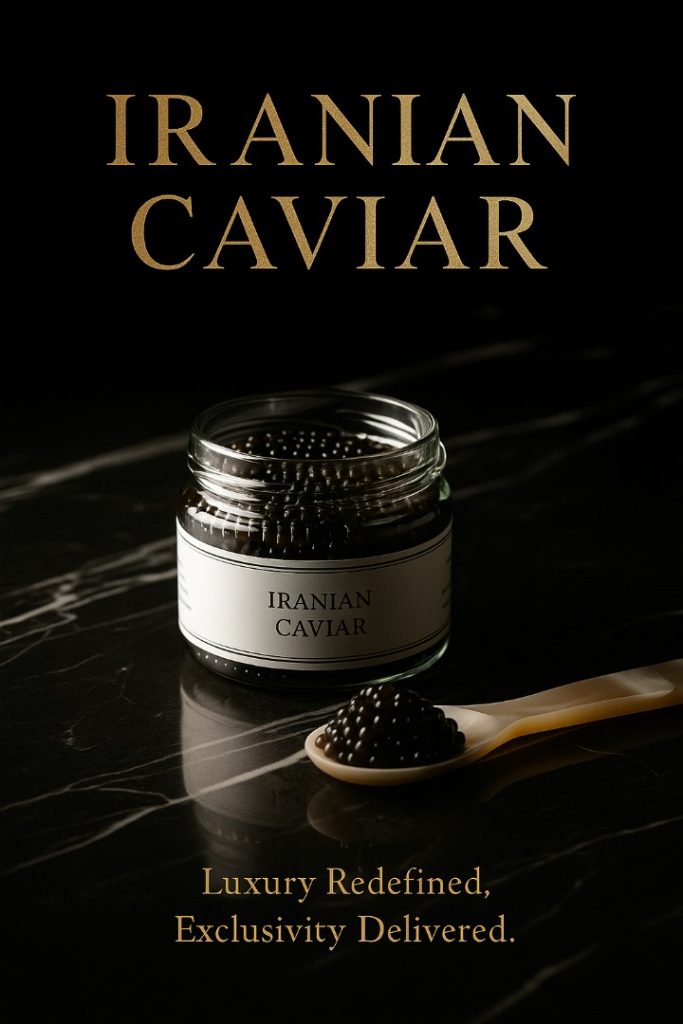
Iranian Caviar, often referred to as “The Jewel of the Caspian Sea,” is internationally recognised for its premium quality, delicate texture, and exquisite taste. Produced from sturgeon species native to Iran’s Caspian coastline, this luxury seafood has been part of Persian culinary heritage for centuries.
For B2B traders, gourmet food distributors, and luxury food enthusiasts, understanding Iranian caviar—from production and export to quality standards and market dynamics—is essential. This article examines the diverse varieties of Iranian caviar, its production methods, export statistics, regulatory frameworks, market challenges, and strategic opportunities, offering a comprehensive resource for those interested in engaging with this high-end industry.
The Legacy of Iranian Caviar
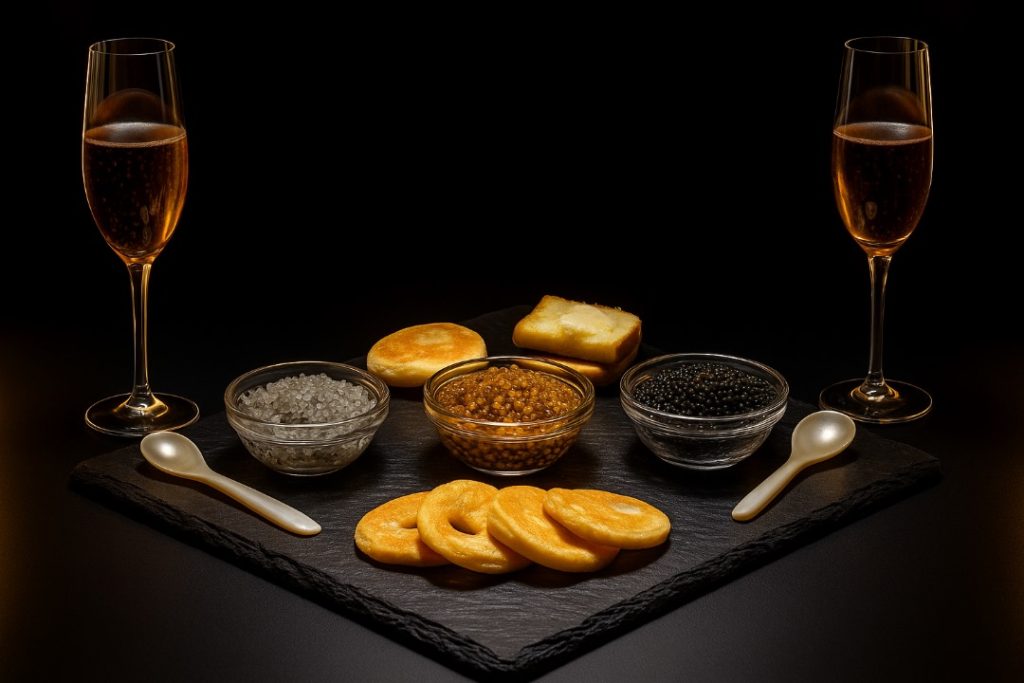
Iran has been a global leader in caviar production for centuries. The Caspian Sea, rich in sturgeon species, has historically been the primary source of the world’s most sought-after caviar. Persian caviar reached European royal courts in the 19th century, establishing Iran’s reputation as a producer of premium luxury seafood. Culturally, caviar symbolizes prestige and culinary sophistication in Iran. Today, “Persian Caviar” remains a hallmark of authenticity, appreciated by gourmet chefs, high-end restaurants, and B2B buyers worldwide.
Historical Milestones
- 18th–19th Century: Export routes to Europe established, introducing Persian caviar to elite markets.
- Early 20th Century: Expansion of exports to North America and Asia.
- Modern Era: Adoption of aquaculture and sustainable farming practices to conserve sturgeon populations.
Iranian caviar production merges centuries of tradition with modern scientific approaches, ensuring consistent quality, sustainability, and global competitiveness.
Major Varieties of Iranian Caviar
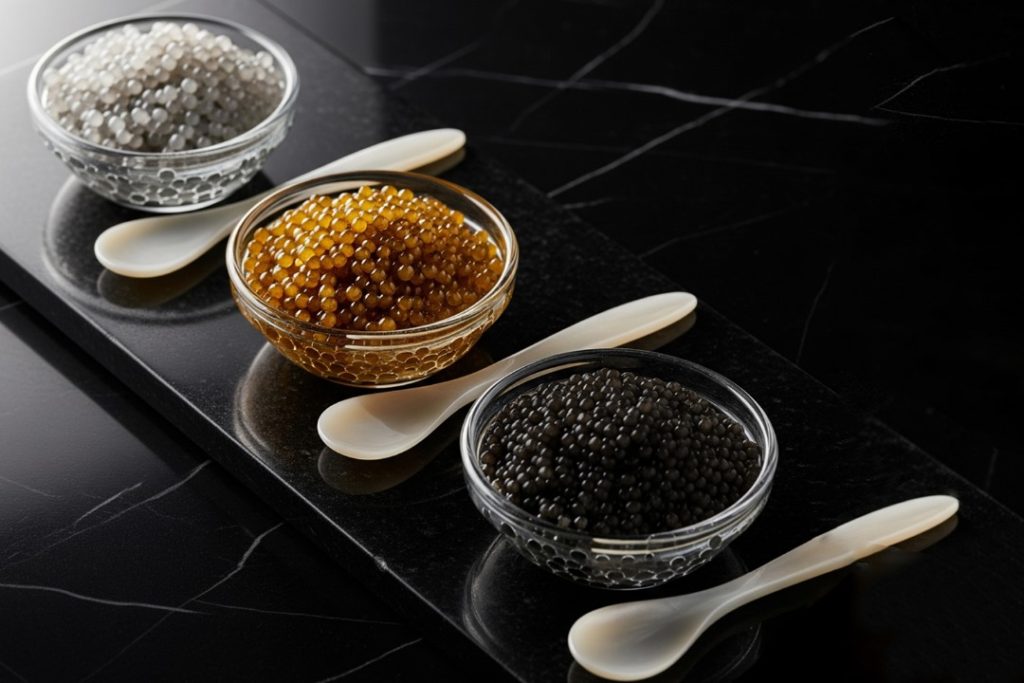
Iran produces three main varieties of caviar, each distinct in flavor, size, and market value: Beluga, Ossetra, and Sevruga.
Beluga Caviar
Beluga caviar is the most prestigious and expensive variety, with large, soft eggs and a buttery, smooth flavor. Highly prized in luxury dining and gourmet markets, it represents the pinnacle of caviar quality.
Market Insights:
- Color: Light grey to deep black
- Texture: Creamy and melts in the mouth
- Target Market: High-end restaurants, luxury retailers
- Price Range: Highest among Iranian varieties
Ossetra Caviar
Ossetra caviar features medium-sized eggs with a nutty, rich flavor. Its golden-brown to dark brown hue enhances visual appeal, making it popular among chefs and gourmets.
Market Insights:
- Texture: Firm yet delicate
- Target Market: Gourmet restaurants, specialty food stores
- Price Range: Mid-tier premium
Sevruga Caviar
Sevruga caviar consists of smaller eggs with a pronounced flavor, offering a slightly more affordable option while maintaining premium quality.
Market Insights:
- Color: Dark grey to black
- Target Market: Entry-level luxury buyers and upscale restaurants
- Price Range: Lower than Beluga and Ossetra
Production and Aquaculture of Iranian Caviar
Iran’s shift from wild sturgeon to sustainable aquaculture has strengthened production while protecting natural populations.
Key Production Regions
- Mazandaran: Hub of high-capacity farms and processing facilities.
- Gilan: Advanced hatcheries with scientific breeding methods.
- Golestan: Combines wild stock conservation with aquaculture.
These provinces benefit from Caspian Sea proximity, freshwater access, and expertise in sturgeon farming.
Aquaculture Techniques
Modern farms use:
- Controlled feeding programs for optimal egg quality
- Water quality management to maintain healthy fish
- Sanitary processing facilities to prevent contamination
Production Volume
According to the Iranian Fisheries Organisation (IFO) and FAO, Iran produces between 2.5 – 4 tons annually, with the majority from aquaculture. Controlled farming allows for consistency in egg size, flavor, and texture, meeting international gourmet standards.
Export Markets and Global Reach
Iranian caviar is exported worldwide, with Europe, the Middle East, Asia, and North America as primary destinations.
Major Markets
- Europe: Germany, France, Belgium, Italy – luxury restaurants and gourmet retailers dominate.
- Middle East: UAE, Qatar, Saudi Arabia – Dubai acts as a regional re-export hub.
- Asia: China, Japan, South Korea – growing markets for luxury food.
- North America: US and Canada – smaller quantities due to FDA regulations but high-value markets
Trade Statistics
- 2022 exports: 5.77 tons of caviar
- 36% shipped through personal luggage trade
- 41% growth in export value in early 2023 vs. same period 2022
- Robust demand for Beluga, Ossetra, Sevruga
Logistics
Cold-chain transport is essential. Proper vacuum-sealed tins and temperature-controlled shipping ensure premium quality upon arrival.
Regulations, Standards, and Certifications
Compliance with international regulations safeguards both consumers and sturgeon populations.
Key Regulatory Requirements
- CITES Certification: Legal trade of sturgeon species
- EU Standards: Labeling, hygiene, and transport requirements
- US FDA Compliance: Inspection and import certification
- Food Safety Protocols: Microbiological and chemical testing
Quality Assurance
Farms adhere to ISO and HACCP guidelines, with quarantine procedures to ensure contamination-free products. These measures strengthen the credibility of Iranian caviar in global markets.
Challenges Facing the Iranian Caviar Industry
- Transaction and Banking Restrictions:For newbies and young merchants, it’s somewhat complicated to engage in trading with Iran directly in comparison to other countries. Professionals and skilled business consultants know how to handle this challenge.
- Competition: Rising production from Russia and China
- Environmental Concerns: Overfishing and habitat loss
- Logistics: Cold-chain maintenance is costly and critical
- Brand Awareness: Limited marketing in emerging markets
Opportunities and Competitive Advantages
- Heritage & Authenticity: Centuries of Tradition
- Superior Product Quality: Unmatched texture and flavor
- Strategic Geography: Close to Europe, Middle East, and Asia
- Sustainable Practices: Responsible aquaculture protects sturgeon
- Market Growth: Rising global demand for gourmet foods
- Diversification: Potential in luxury gift sets, gastronomy, and specialty markets
Conclusion
Iranian caviar remains a benchmark of luxury and culinary excellence. Sustainable aquaculture, strict standards, and centuries of expertise ensure it holds its place in gourmet markets globally. For B2B traders, luxury food distributors, and high-end consumers, Iranian caviar represents both a premium product and a strategic business opportunity.
Despite logistical, regulatory, and competitive challenges, heritage, authenticity, and quality position Iranian caviar as a resilient, valuable asset in the international luxury food market.