


- History and Origin of Pistachios in Iran
- Main Cultivation Regions in Iran
- Exported Pistachio Products
- Pistachio Size Grading (Ounce System)
- Economic Importance and Global Market Trends
- How to Import Iranian Pistachios
Introduction
Iranian pistachios, often called the “green gold” of Iran, are celebrated worldwide for their unique flavor, high quality, and versatility. With a history stretching back thousands of years, pistachios have grown to be not just a cornerstone of Iranian agriculture, but also a key driver of the country’s export economy. For international buyers, understanding the varieties, cultivation regions, and export processes is essential for sourcing premium pistachios directly from Iran.
History and Origin of Pistachios in Iran
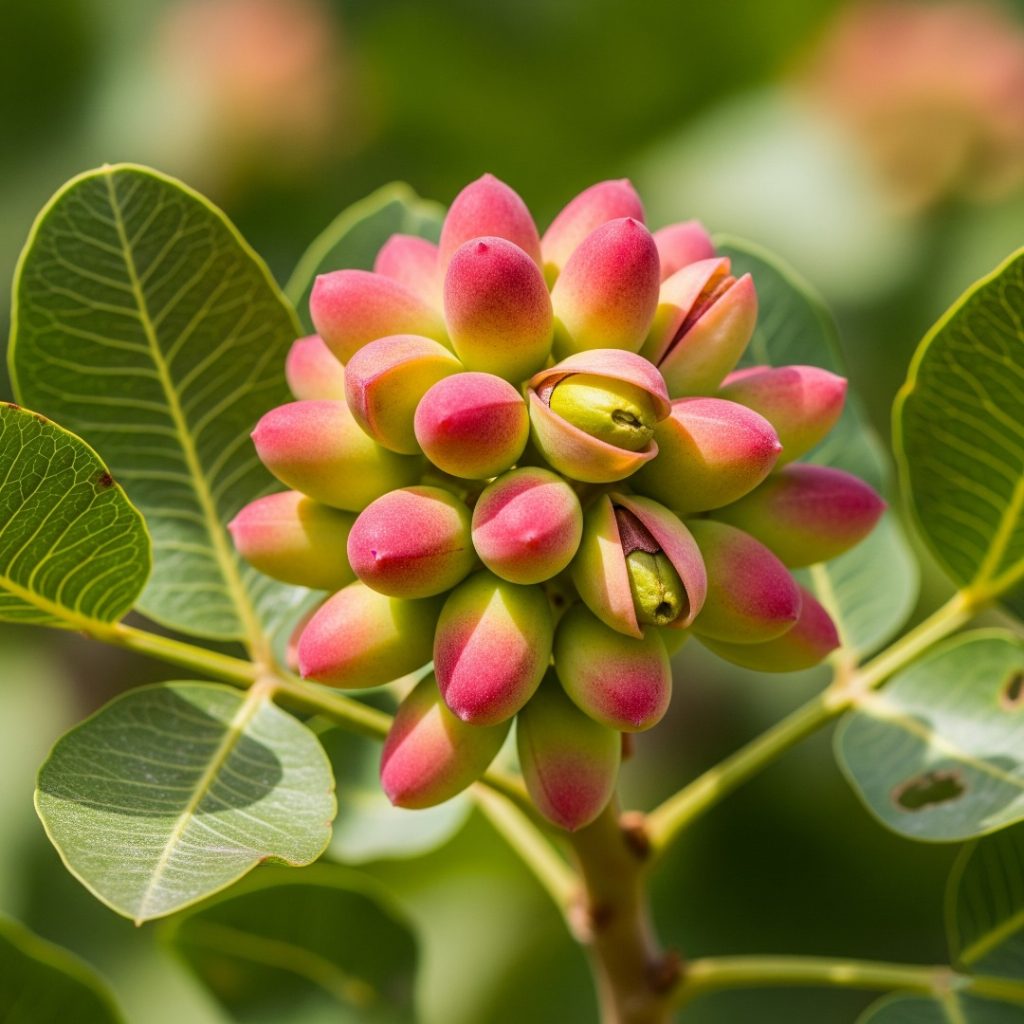
The pistachio tree is dioecious, meaning it has separate male and female trees, and relies on wind for pollination. It thrives in regions with hot, dry summers and cold winters, performing best in light, sandy soils with excellent drainage. Archaeological evidence suggests that pistachios have been cultivated on the Iranian plateau for over 4,000 years, highlighting Iran’s historical role in introducing this nut to the world.
The Persian origin of the word “pistachio” further underscores the country’s influence in shaping the global pistachio market. Historically, these nuts were a highly prized commodity along the Silk Road, traded alongside spices, textiles, and other luxury goods. Today, Iran continues this legacy, producing some of the finest pistachios globally by combining centuries of traditional cultivation knowledge with modern agricultural practices. This ensures both superior taste and consistent quality, making Iranian pistachios a preferred choice for importers and wholesalers seeking premium nuts.
Main Cultivation Regions in Iran
Iranian pistachio orchards are concentrated in arid and semi-arid regions, with Kerman province being the main hub. Cities like Rafsanjan, Sirjan, Zarand, and Anar dominate production and are globally recognized for high-quality pistachios. Other significant cultivation areas include Razavi Khorasan (Bardskan, Mahvelat, Khalilabad), Yazd, Semnan (Damghan), and Qazvin. These regions provide optimal soil conditions—light, sandy, and well-drained—for pistachio growth, along with the dry climate and temperature variations necessary for producing flavorful nuts.
Popular Iranian Pistachio Varieties
Iranian pistachios are categorized into two main shapes: long (almond-shaped) and round (hazelnut-shaped), each containing multiple cultivars with unique characteristics.
Long Pistachios (Almond-Shaped)
Akbari Pistachio:
People often call Akbari the “king of pistachios” because of its elongated shape, large size, and premium quality. Buyers in European and Arab markets actively seek Akbari for its superior appearance and flavor, making it a top choice for exporters who want to provide luxury pistachios.
Ahmad-Aghaei Pistachio:
Exporters value Ahmad-Aghaei for its long, white shell, excellent taste, and attractive appearance. This variety enjoys strong demand in global markets thanks to its consistent quality and appealing look.
Damghan Khanjari Pistachio:
Farmers name this variety after its dagger-like shape. Its slightly curved and elongated form gives it a distinctive appearance among long pistachios. Specialty buyers favor Damghan
Round Pistachios (Hazelnut-Shaped)
Fandoghi (Ohadi):
The most common variety, small and round, with the highest production volume. Affordable and widely exported.
Kaleh-Ghoochi (Jumbo):
Large, round pistachios valued for their appearance and flavor, attracting premium buyers globally.
Exported Pistachio Products
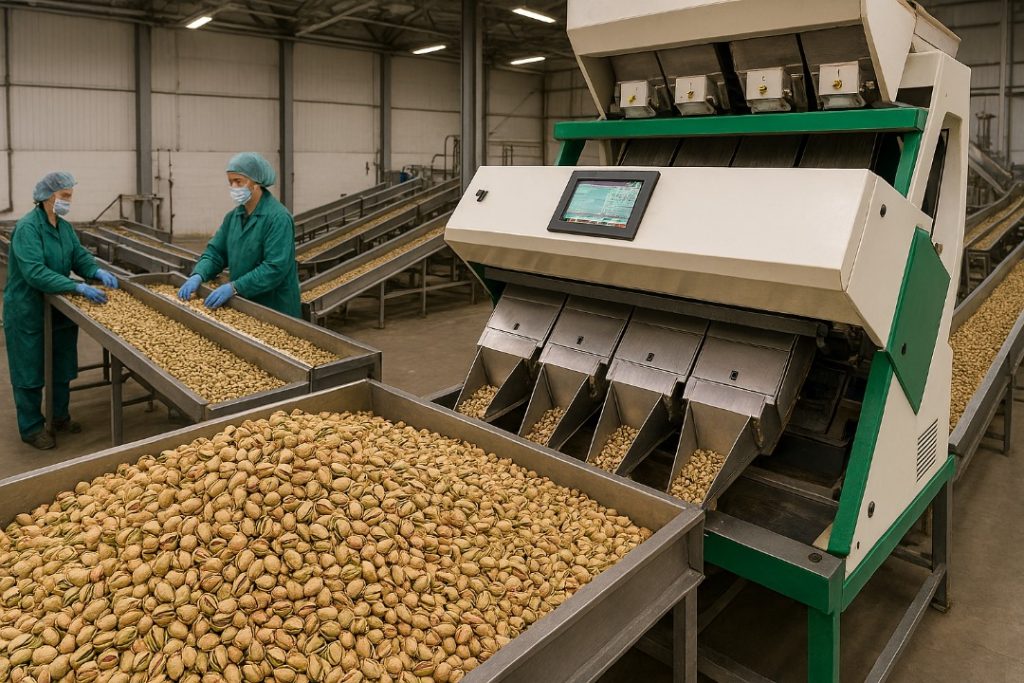
Iran’s pistachio exports are diverse, catering to both consumer and industrial markets:
- Natural Open Raw Pistachios: Hard-shelled, naturally split open.
- Roasted & Salted Pistachios: Popular snack format, available with various flavorings.
- Pistachio Kernels: Green or split kernels, used in confectionery, ice cream, and culinary industries.
- Slivers & Powder: Thinly sliced or powdered pistachios for desserts, pastries, and garnishing.
-
Pistachio Shells: Utilized for animal feed or industrial purposes, such as biofuel.
Pistachio Size Grading (Ounce System)
Size plays a crucial role in determining the value of pistachios, especially for exports. The ounce system lets buyers count how many kernels are in 28.35 grams (1 avoirdupois ounce). When a sample contains fewer kernels per ounce, it means the pistachios are larger and more premium.
20-22 ounce: Very large, luxurious, often Akbari.
28-30 ounce: Smaller, typically Fandoghi.
How to Calculate Pistachio Ounce:
- Sampling: Take a 142-gram sample (equivalent to 5 ounces).
- Counting: Count the number of kernels in this sample.
- Final Calculation: Divide the total number of kernels by 5 to get the number of kernels per ounce.
Example: If a 142-gram sample contains 120 kernels, the pistachio ounce count would be 24 (120 ÷ 5 = 24).
“Knowing the ounce system allows buyers to easily judge the quality of pistachios and choose the right size for their market. Larger pistachios (with lower ounce counts) are ideal for premium export markets, while smaller ones (with higher ounce counts) work best for bulk orders or more budget-friendly options.”

Standard Ounce Ranges and Their Significance:
| Ounce Range | Size Description | Common Varieties |
|---|---|---|
| 18–20 | Very large, luxurious | Akbari |
| 20–22 | Large | Ahmad-Aghaei, Kaleh-Ghoochi |
| 22–24 | Medium to large | Mix of long and round varieties |
| 24–26 | Medium | Most commonly produced sizes |
| 26–28 | Small | Fandoghi |
| 28–30+ | Very small | Fandoghi and lower-grade exports |
Economic Importance and Global Market Trends
Iranian pistachios are a leading non-oil export product, generating significant foreign exchange revenue. Despite water scarcity and global competition, Iran maintains a strong market share thanks to superior quality and flavor. Trends shaping the market include:
- Increasing demand for organic pistachios in Europe and North America.
- Blockchain traceability and sustainability becoming important for high-value markets.
- Digital trade platforms simplifying connections between exporters and buyers.
How to Import Iranian Pistachios
Step-by-Step Guide:
- Identify Reputable Suppliers: Prefer certified exporters with transparent processing standards.
- Select Product Type: Raw, roasted, kernels, or processed forms.
- Verify Quality & Size: Ensure grading and ounce counts meet market requirements.
- Understand Documentation: Include phytosanitary certificates, customs clearance, and packaging standards.
- Arrange Logistics: Air or sea freight depending on volume, temperature control for quality preservation.
Pricing & Negotiation:
- Price varies by variety, size, and product type.
- Large kernels (low ounce count) command premium prices.
- Long-term partnerships often include flexible payment terms and bulk discounts.
Conclusion
Iranian pistachios offer unmatched flavor, quality, and a rich cultural heritage. For international buyers, sourcing directly from Iran ensures premium products, consistent supply, and access to top varieties. Whether you are a wholesaler, retailer, or manufacturer, understanding the varieties, grading, and export procedures is key to successful trade.